
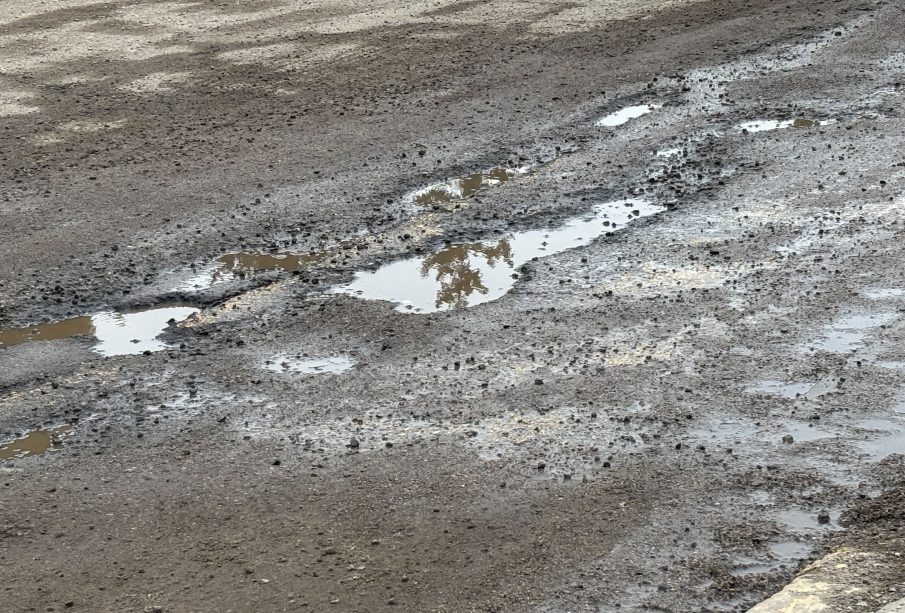
Worsening road conditions slow traffic and raise safety concerns
Students and staff driving around the U of R campus, especially along the south side of campus toward First Nations University (FNUniv), are facing troubles as potholes continue to spread across one of the busiest campus routes.
The U of R acknowledged this issue in an email sent to the campus community earlier last week, noting the road damage has become a concern and asked for patience while conditions improve.
“The ground must fully thaw,” the email read, explaining that repairs done too early would not last. Until then, drivers are being urged to slow down and stay alert.
But for many students, the explanation offers little comfort as they navigate what some describe as the worst road conditions they have seen on campus in years.
Daily commute difficult
“It’s honestly brutal,” said second-year arts student, Maya Singh, who drives to campus daily. “You can’t avoid the potholes because they’re everywhere. I feel like I’m dodging them every few seconds.” Singh said she worries about the long-term impact and damage to her car. “I already had to get my tires checked because I hit one hard last week. It’s stressful, especially when you’re already late to class.”
The stretch of the road leading toward FNUniv is a key route for students, faculty, and visitors, making the situation more than just an inconvenience. During peak hours, traffic slows significantly as drivers try to maneuver around the largest holes. This creates congestion and increases the risk of minor accidents. Third-year business student, Daniel Shorten, said the road conditions have changed how he plans his commute.
“I leave earlier now just in case traffic backs up,” he said. “And I drive way slower than usual. It’s not just about my car, it’s about safety too. If someone swerves suddenly to avoid a pothole, it could go wrong fast.”
Even if it’s not perfect, filling the worst potholes would make a big difference.” – Lucas Brown, engineering student, U of R
Questions about long term maintenance
Some students say the issues go beyond seasonal wear and tear and reflect a lack of long-term maintenance.
“I get that winter is tough on roads here,” said first year education student, Alina Petrov. “But this happens every year. It feels like we’re always waiting for repairs instead of preventing the problem in the first place.”
Petrov added that clearer communication would help ease frustration.
“The email explains why they can’t fix it yet, which is good, but students also want to know when it will actually get better.”
According to the university’s email, the delay is due to weather-related factors. During the winter, water seeps into cracks in the pavement and freezes, expanding and causing the surface to break apart. As temperatures rise, the ice melts, leaving behind weakened sections of road that can quickly turn into potholes under the weight of vehicles.
Students demand temporary fixes
Facilities management says that until the ground fully thaws and dries out, any repairs would likely be temporary and could fail within days. Some students argue that even temporary fixes would be better than none at all.
“Even if it’s not perfect, filling the worst potholes would make a big difference,”said first year engineering student, Lucas Brown. “Right now, it feels like nothing is being done to fix the situation.”
Brown also pointed out that the issue affects more than just cars. “Cyclists have it even worse. And if you’re walking nearby, you have to watch out for cars swerving or hitting holes. It’s a safety problem for everyone.”
As temperatures continue to rise in the coming weeks, students expect the university to fix these issues. Until then, students, staff, and visitors will have to navigate the pothole-filled road with caution and hope that smoother days lie ahead.