
A student shares her experience with inaccessible spaces, steep ramps, and the high cost of mobility equipment
Accessibility is more than being able to enter buildings. It is about being able to navigate spaces while feeling comfortable.
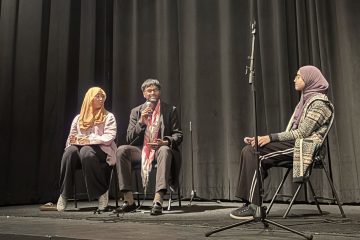
Dan Bach, a first-year actuarial science student at the University of Regina (U of R), shares her experience navigating the city and the university as a wheelchair user.
Lack of ‘good’ ramps
Bach grew up in Regina, and while she noticed more ramps around the city over the years, their design remains a concern.
“There’s more ramps, but they’re not good ramps,” Bach said.
Ramps are intended to make spaces accessible. However, according to Bach, some are too steep to navigate comfortably. Uneven sidewalks and roads also make crossing the street a challenge.
These barriers mean Bach often needs assistance from others.
Her younger brother, Phi Bach, who’s in high school, has been a significant source of support throughout her life and is someone she turns to when she needs assistance.
Bach faces similar challenges at the U of R. Some routes on campus are difficult to navigate because of the steep inclines and uneven surfaces.
To make getting around campus easier, she arranges her class schedule so her classes are closer to one another.
Bach identifies the ramps between the Administration-Humanities Building (AdHum) and La Cité, as well as those between the Dr. William Riddell Centre and the Education Building, as difficult to navigate, even with a motor attached to her wheelchair to help her manage inclines.
Inside the classroom, Bach also faces barriers during lectures or exams.
When entering a lecture room, the only accessible seating available to Bach is towards the back of the room. She prefers to sit at the front of a classroom because it is closer to the professor, making it easier for her to be noticed and ask questions.
“When we do a quiz in class, I’m like, I can’t do this because I don’t have access to the teacher; I can’t go down and ask,” said Bach.
Sitting far from the front also makes it difficult to see and hear the professor.
Bach said an accessible entrance at the front of the lecture rooms would improve her learning experience.
When writing exams, Bach prefers the Brad Hornung Accommodations Test Centre (ATC) — located in Room 139 of the College West Building — because she is unable to sit for long periods and her wheelchair can be noisy.
The testing centre has both shared and private rooms, with the private room accommodating two to five tables. The tables are height-adjustable, and the doors open automatically.
This is a normal human need; why make it more expensive? -Dan Bach
Financial aid
Navigation barriers are not the only challenges wheelchair users face. The cost of mobility equipment and accessibility modifications is also a major concern.
Bach said the Canadian Disability Benefit provides eligible individuals with disabilities up to $204.20 per month, but she believes this is insufficient compared to the costs of mobility equipment and accessibility modifications.
Bach said wheelchairs, vehicles, ramps, and accessibility modifications can be expensive.
The frame of her wheelchair cost $2,500, excluding the wheels, seating, backrest, and motor.
“This is a normal human need; why make it more expensive?” Bach said.
Bach drives a vehicle that she said cost her over $100,000, including hand controls. To afford the expense, she financed the vehicle and will be making payments over the next few years.
Even with financial support from her parents, Bach sometimes has to request funds from organizations such as Kinsmen Foundation and Saskatchewan Aids to Independent Living (SAIL).
After repeatedly encountering accessibility barriers, Bach said she has become accustomed to them.
“I feel like after a while you just get used to it. Sometimes I have to ask people multiple times just to get something so small, like filling in a track,” said Bach.
Bach’s experiences highlight the accessibility improvements that still need to be made. She hopes future changes will allow wheelchair users to navigate public spaces easily without having to become accustomed to the barriers they face daily.