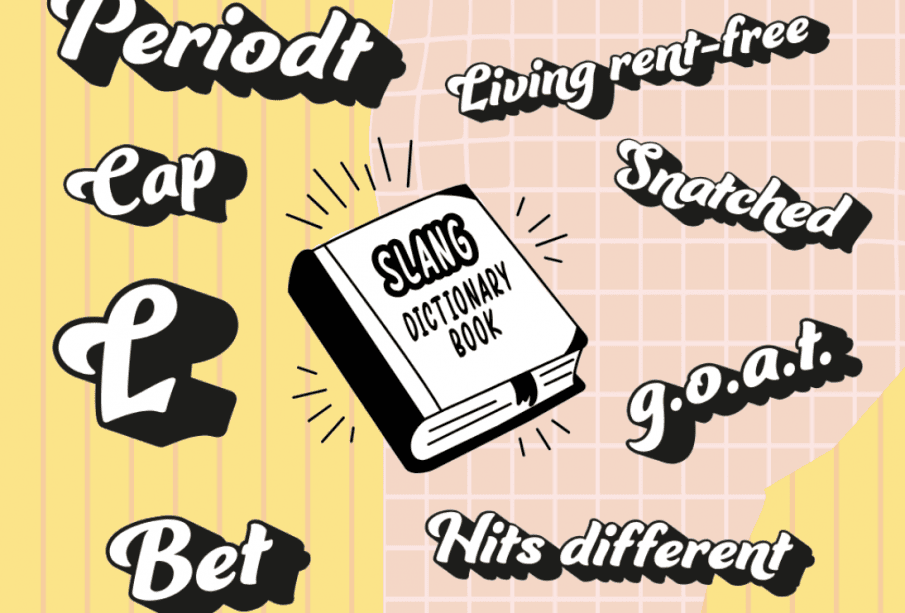
If you find yourself scrambling while communicating with the young people, we got you!
Ever wondered what that word you’ve seen online countless times actually means? Where did it come from? It can be tough to track the meaning or root of a popular slang, especially in this age of ever-changing trends and vocabulary.
Generation Z (Gen Z) is commonly defined as the generation of people born between 1997 and 2012. Gen-Z have grown up with the internet, so many of the generation’s slang are credited to originate from the internet and media. However, a large quantity of the terms are based in African American Vernacular English (AAVE) and ballroom culture from the 1980s and 1990s.
The shift from Gen Z to Generation Alpha (Gen Alpha), which is the generation born between 2010 and 2024, has also made it difficult to distinguish what words fit into which generation. But do not fret! I have got your back.
Following is a list focused on common Gen Z slang which you can use in your day to day conversation to sound hip i.e. cool.
W&L
Originates from online gaming communities like Twitch. W is the abbreviation for win or success while L stands for loss or defeat. For example, “Scoring well in the midterm was a big W but that semester has been an L overall.”
NPC
This stands for Non-Playable Character which is a common term used in video games. It was popularized around 2022 with the rise of NPC Twitch streamers which are people who imitate the behavior of video game background characters. The abbreviation is used to describe someone who doesn’t think for themselves.
Roman empire
Used to describe something you think about all the time. It originated as a TikTok trend in 2023 which had people asking men how often they do think about the Roman empire.
An example would be, “A stable economy is my Roman empire,” meaning that I think about a stable economy all the time.
Living rent free
This is used to describesomething that stays in your head and you cannot stop thinking about. This came from pop psychology and was popularized in the mid-2010s on social media. It is a thought that lives in your head and you, the landlord, cannot get rid of it even though it serves you no purpose (living rent free).
An example would be, “Bad Bunny’s superbowl performance lives rent free in my head.”
Delulu
This is the Gen Z way of saying delusional. It was popularized by K-pop fan communities on TikTok. If you call someone delulu it means that they are delusional and out of touch with reality.
Cringe
This is short for the word “cringy” and can be used as an adjective for something uncomfortable, awkward, or embarrassing. It originated from early 2000s internet culture.
Ick
An ick is something that causes a sudden turn-off. When someone says, “That gave me the ick,” it means it made them immediately uninterested. The word became popularized when Olivia Attwood used it on the reality TV show, Love Island, in 2017.
Canon event
A cannon event is a pivotal experience that shapes an individual’s identity or is something that was meant to happen. It was popularized by the movie Spider-Man: Across the Spider-Verse.
For example, “Becoming a regular reader of the Carillon was a cannon event.” 😉
GOAT
Abbreviation for Greatest of All Time. This is often used in the sports culture and is credited to famous boxer Muhammed Ali. It can be used as a noun and if you call someone a GOAT, you mean they are very skilled or talented or just generally admirable.
Incel
This is a portmanteau of involuntarily celibate. The word is often used as a noun to describe misogynistic men who blame women for their celibacy. The term was popularized online during the 2010s.
Mog/mogging
This is a verb. It means to look better than someone else or to out-shine them. It originates from the term AMOG or Alpha Male Of Group, which was popularly used by an online community of misogynistic men called “manosphere” in the early 2000s.
Bruh
This is used like an exclamation for disappointment, surprise, and frustration. It is a more dramatic way to say “bro”which also has the same meaning.
For example, “Bruh! How is the exam season already coming up?!” Originating in the southern United States, it is deeply rooted in AAVE.
Fire/Lit
This is an adjective to call something really good. It comes from AAVE and the hip-hop culture in the 1990s.
Cap
Used to denote a lie and is derived from AAVE. It is commonly used when calling someone out on a lie. When you “call cap” you call out a lie or express suspicion. When you add “no cap” to a sentence you emphasise that you are telling the truth.
For example, “I call cap on the promise of affordable tuition but the new Ad-hum pit renovations are fire, no cap!”
Crash out
A sudden burst of anger or to react in an exaggerated manner. This is also rooted in AAVE and became popular in 2013. It is primarily used as a verb i.e. someone is crashing out or as a noun i.e. someone had a crash out.
Bet
Coming from 1980s and 1990s AAVE, the term is used to mean “OK”, “sure”, or “deal” while coming to an agreement.
For example, “Are you coming to the Carillon’s open ed-board meeting at 4 p.m. on Mar 4?”
“Bet!”
Periodt/period
This is often used to emphasize a point or to end a conversation as an exclamation coming from AAVE. For example, “Baby Bunny is the GOAT, periodt!”
Hits different
This is used as a flat verb which is a verb used as an adjective. It is used to describe something that is better than other comparative alternatives often used while talking about a feeling or experience. For example, “Ice cream from Milky Way on a hot summer evening hits different!”
Opp
This is a noun used to denote an opponent or hater. If someone is your “opp” you likely are not very fond of them or see them as a competition. It comes from the AAVE and hip-hop culture in the 1980s.
Twin
This is a noun which is often used to denote a close friend or a twin flame.
Slay
Can be used as both a verb and an adjective and sometimes also as an exclamation for excitement or approval. Coming from the Black and Latino LGBTQIA+ spaces and ballroom culture during the late 1980s it means to do something well and often relates to style or fashion when used as an adjective.
Ate
Originating in the Black and Latino LGBTQIA+ ballroom culture during the early 2000s, this is another flat verb. It describes something done well, often relating to outfits or performance. It is often followed by “and left no crumbs” to further emphasise on the excellence of something.
For example,”Her speech ate!”
“Period! She ate and left no crumbs.”
Gag/gagged
This means to be shocked or stunned and is used as a verb. The term came from the LGBTQIA+ ballroom culture during the 1970s and 1980s.
Snatched
Coming from the 1990s Black and LGBTQIA+ ballroom and drag culture, this is an adjective which describes looking really good or fierce or flawless. It often refers to a skinny waist or an hourglass figure.
It’s giving
This is another flat verb coming from the Black and Latino LGBTQIA+ ballroom culture during the 1970s and 1980s.It is used to describe a specific vibe or energy that an object or atmosphere gives off.
For example, “It’s giving 80s Hollywood” means the energy is like that of Hollywood in the 1980s.
Tea
This is a synonym for the word “gossip”. It came from the 1980s Black LGBTQIA+ drag culture.
Camp
Originating from late 19th century queer subculture, this is an adjective used to describe a style that is intentionally exaggerated or ironic. It is intentionally made so bad that it appears unique.
Some Gen Alpha terms
1. Rizz: Short for charisma. Originated from popular Twitch streamer Kai Cenat.
2. 6-7: Has no overt meaning, is used as an ambiguous “catch all” term which can be used to mean chaotic or cool or both at the same time. Often credited to musician Skrilla’s song “Doot Doot (6 7).”
For example, “That outfit is 6-7!” means the outfit is cool and “Stop acting 6-7” would mean stop acting annoying.
3. Alpha: Means someone who is dominant in a group. Often regarding an alpha male or someone with a lot of power.
4. Beta: A subordinate, less powerful, easily manipulated person.
5. Sigma: A lone wolf and high status. This also relates to the idea of the grind or working hard for success.
The terms alpha, beta, and sigma are inspired by the biologists’ way to refer to animals and their social hierarchy. They gained traction in the manosphere culture.
6. Unc: This is the shortened version of the word “uncle”. It is often used to refer to someone acting old, usually an uncle or an older male.
Now with this fire list of all the GOATed terms you can slay any conversation with Gen Z and Gen Alpha without leaving any crumbs and you will have no opp for your rizz, no cap. Honestly guys, it’s giving canon event!