
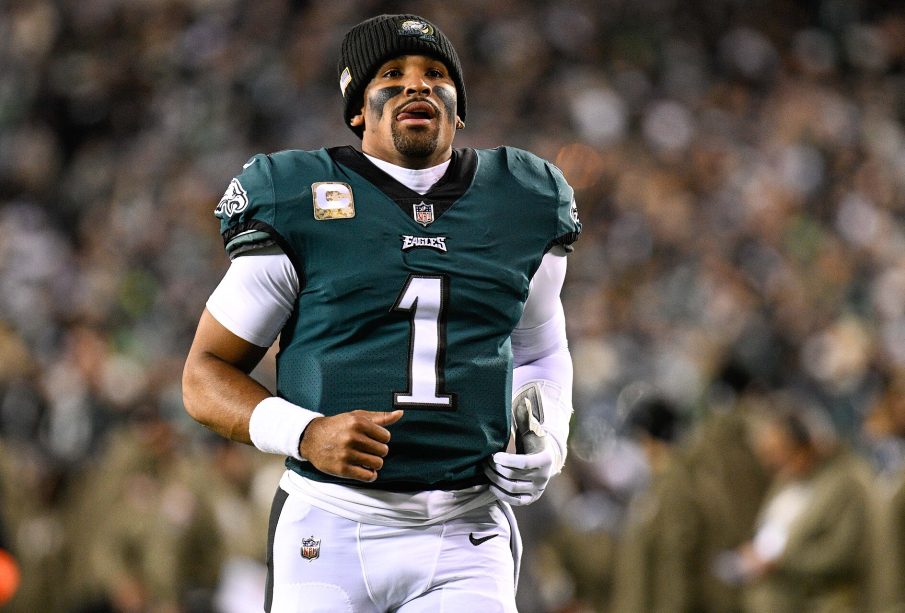
Hurts’ medical care raises questions about player safety protocols in the NFL
The National Football League (NFL) is one of the most prominent sports leagues in North America, and perhaps even the world. The Philadelphia Eagles are also one of the most well-known teams, thanks in part to the attention brought to them by Jason Kelce and their Super Bowl matchups against the Kansas City Chiefs in 2023 and 2025.
This season, the Eagles have been riddled with injuries, retirements, and other setbacks that have contributed to their 2–5 record. However, the one thing Eagles fans could always rely on was quarterback Jalen Hurts. Hurts, 28, has won a Super Bowl, appeared in two, earned three Pro Bowl selections, received second-team All-Pro honours, and won both the Bert Bell Award and Philadelphia Citizen of the Year award. Needless to say, Hurts has a lot of game.
This season, the NFL arranged to play several regular-season games in Europe. The Eagles were scheduled to face the Jacksonville Jaguars in London on Oct. 11.
Hurts was playing against the Los Angeles Rams on Oct. 4 when another player’s cleat struck his leg. Four days later, he reported pain in his leg to the team’s training staff and requested treatment.
The following day, the team travelled to London for the game, giving the players nearly two days to adjust to the six-hour time difference. That same day, the team listed Hurts’ calf injury on its injury report, with his availability for the game uncertain.
The team continued its game preparations as usual, despite being nearly halfway around the world. Still experiencing discomfort, Hurts underwent an ultrasound in London, which the team described as being performed “out of an abundance of caution.”
The ultrasound revealed that Hurts had a superficial blood clot in his leg. According to the team, its doctors and physicians at the Cleveland Clinic emphasized the importance of mobility and cleared Hurts to play and fly home, provided he underwent a follow-up ultrasound within 72 hours of returning to Philadelphia.
The Eagles lost the game and returned home. Hurts continued receiving medical treatment in the U.S. He was ruled out for the Eagles’ next game against the Carolina Panthers and was later placed on injured reserve while seeking a second opinion.
On Oct. 19, the Eagles announced that Hurts had developed blood clots in his lungs, making his condition considerably more serious. Hurts is expected to miss the remainder of the season.
Blood clots can be difficult to manage and may be life-threatening. One of the primary treatments involves blood thinners, which slow the clotting process and increase the risk of internal bleeding. Athletes taking blood thinners are generally restricted from participating in contact sports because of the increased risk of internal bleeding.
The NFL and the NFL Players Association (NFLPA) called for a full investigation into Hurts’ medical care, with a review announced on Oct. 25. The team maintains that it acted on medical advice, but it has received immense backlash from fans and the general sports community.
Flying after a blood clot diagnosis can pose additional risks, particularly when the diagnosis is recent. Patients are advised to avoid massaging the affected area, and physical contact during a football game could potentially create additional medical concerns. Thankfully, Hurts did not experience an apparent complication during the game itself. The situation raised concerns and criticism from members of the sports medicine community about the medical care Hurts received.
Richard Liu, a physician in Florida, commented on the situation: “Blood clots in the leg are usually in obese people, smokers or patients who are generally unhealthy. The initial diagnosis of the blood clot was thought to be too small to be a problem and then grew larger.”
Reporters covering the Eagles have questioned the coaching staff’s decision to allow Hurts to play and fly, however, head coach Nick Sirianni maintained that he isn’t a doctor and was following medical advice.
A similar sentiment was expressed by Rams head coach Mark McConkey: “At the end of the day, it’s up to the doctor to give clearance, and then the player or the athlete also has to want to play. We’ve had a couple situations where the doctors cleared them, but the player didn’t feel confident and ready, and that’s also fair.”
Whether Hurts received appropriate medical care may become clearer following the official review. In the meantime, a 28-year-old athlete with much of his career ahead of him is sidelined and the Eagles’ rough season continues to get rougher.


