
As gas prices go totes cray, EVs loom as an option for affordability seeking students
There has been a rapid move from gasoline to electric-powered vehicles around the world. Even in Saskatchewan, EV cars are more and more common.
At the University of Regina, however, the electric revolution moves oh-so-slowly.
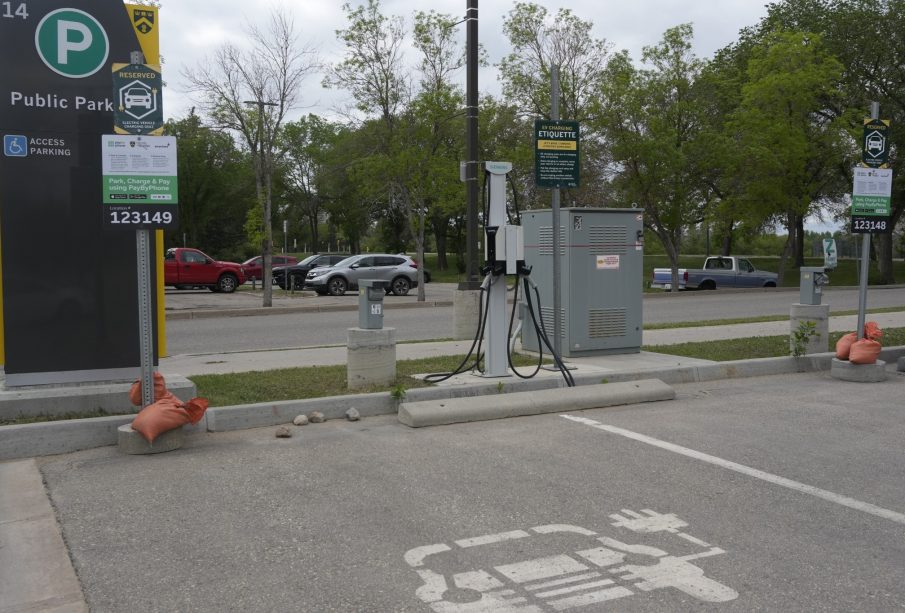
Yes, there are charging stations for electric vehicles on campus. Two, in fact.
And both are in lot 14 — near Kīšik Towers.
Both residence services and parking use gasoline-fuelled cars, while protective services are the only department with hybrid vehicles.
As far as we know, no university vehicle is fully electric.
Hybrid vehicles are a combination of traditional internal combustion engines and one or more electric motors. There are many types of hybrid: plug-ins, for example, charge using standard outlets (gas kicks in when battery is low), while self-charging hybrids run primarily on gas, and charges through regenerative braking.
In the 2022–2027 Sustainability Action Plan for the university, some of the goals included replacing fuel-based vehicles with electric.
One of the goals includes “[providing] sufficient charging stations on above-ground [lots].”
The carillon reached out to the Saskatchewan Electric Vehicle Association to gain more insight on the logistics of electric vehicles—perhaps it will help reach these goals faster.
SEVA Dreams
According to Matt Pointer, the association’s founder, SEVA’s mission is to increase electric vehicle ownership in the province.
EV registrations are growing, especially with the increase in fuel prices.
“People are just really getting tired of going to the pumps and not knowing what price they are going to pay,” says Pointer.
“[With EV’s] you pretty much know exactly what you are going to pay,” he says.
SaskPower says around 4,000 vehicles in Saskatchewan are electric. Worldwide, one in five vehicles are now electric.
A highly unscientific carillon survey (stroll through University of Regina parking lot) found one out of 30 cars was fully electric. Three more were hybrids.
As more Saskatchewanians switch to electric vehicles, those numbers will grow.
That said, EV owners face some idiosyncratically Sask. problems.
Incentives? Tree Huggers Don’t Need No Stinkin’ Incentives!
Not-so-fun fact: Saskatchewan EV owners pay more per kilometer than gas drivers do. The reason? Provincial fuels taxes.
Pointer says low increases in fuel tax since 1993 for gasoline and diesel vehicles puts pressure on the Provincial government to find revenue elsewhere.
The ‘solution’: EV owners pay $300 annually — a flat rate that will soon rise with Canada’s inflation rate.
Why are EV owners taking the hit?
The flat rate is supposedly there to offset and balance fuel tax. EV owners do not purchase fuel, so they ‘skip’ that tax, and in theory, are not paying their share of street and highway maintenance costs.
This argument ignores the contribution EVs make by NOT contributing to global warming every time they move.
“The provincial government didn’t feel like there was any net benefit for electric vehicles otherwise driving on the street,” says Pointer
The issue Pointer and SEVA have is not an issue of paying their fair share. They’re ticked that, they pay HIGHER rates than owners of internal combustion engines.
“If the provincial government was going to force us to pay a rate that is based on inflation, then why wouldn’t they also raise the fuel tax on regular gasoline vehicles?” asks Pointer.
Why would Saskatchewan’s conservative Saskatchewan Party government essentially punish people buying more environment-friendly vehicles?
That is a quality question … for a whole other article.
In major centres, people pay about $50 to $60 a month for electric driving.
In comparison, it’s around $150–$200 a month for gasoline.
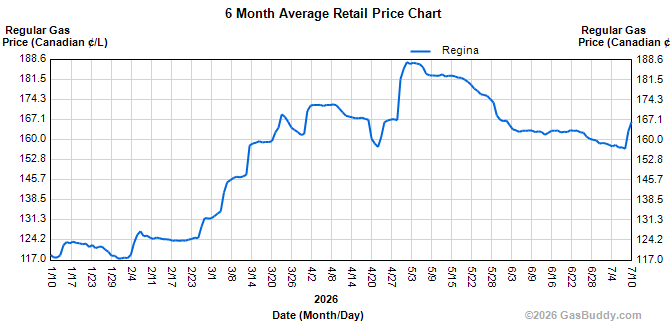
At the beginning of this year, the gas price in Regina was between $1.17–1.24 per litre. This spring, gas prices shot up to almost $1.88 per litre.
Lately it’s hovered between $1.60 to $1.67 per litre.
Gas prices are high, and for U of R students, affordability is the biggest concern.
Charge it!
For EVs University of Regina provides level two charging. There are three levels to electric charging including:
- Level one: standard plug-in
- Level two: higher charging
- Level three: DC fast charger (usually used on highways).
Pointer recommends level two charger for sustainable battery charging at home.
When winter arrives, driving range decreases by 30 to 40 per cent — a number that depends heavily on individual driving habits.
Pointer, however, says it’s similar to gasoline driving.
Pointer says there’s a lot of misinformation out there about EVs. Social media bots and trolls claim they’re unreliable, bad for winter driving and every bit as environmentally unfriendly as gas-powered cars. Pointer, who has been using EVs for eight years, says ’s found them dependable.
Regardless, with fuel prices going berserk maybe EVs are the future for affordability.
A lot of Saskatchewan residents won’t know until they try.