Fee hikes leave some wondering if their voices are even heard
In the March issue of the Carillon, second-year music student Ryan Scott expressed that if “[URSA] can figure out a way to better advocate for reducing how much we pay, I’ll start caring.”
Well, Ryan — here we are with a conversation about one of the issues that affects nearly every student on campus: tuition.
In May 2026, the University of Regina released its 2026–2027 budget, which included a three per cent tuition hike set to take effect this fall.
For Fall 2026, a full-time Arts student taking five classes will pay about $4,782.90 in tuition alone. On top of that, students are charged a number of mandatory fees, including student, wellness and technology-related fees, a bus pass, and a health and dental plan.
Altogether, these costs bring a typical full-time domestic Arts student to roughly $5,300–$5,450 per semester in tuition and mandatory fees, before even factoring in basic living expenses like rent, groceries, or textbooks.
And let’s keep in mind that full-time students generally go to school for TWO semesters in a school year.
While some fees may be eligible for opt-out depending on a student’s situation, most students still end up paying most of these costs.
The increase comes alongside a projected $7.2 million operating deficit and a significant drop in international student enrolment, which has reduced anticipated tuition revenue. The university cites these financial pressures as part of the reasoning behind its budget decisions.
However, the timing inevitably raises questions about whether students are being asked to absorb too great a share of the institution’s financial challenges.
Although students often direct their frustration toward the university, the provincial government cannot be left out of the conversation. Changes in public funding for post-secondary education have contributed to the financial pressures post-secondary institutions now face.
What stands out is that Saskatchewan is often promoted as one of the most affordable provinces in Canada, yet students seem to face tuition increases year after year. While each increase may appear modest, the cumulative effect is significant, with questions of affordability.
For years, universities across Canada have relied heavily on international student revenue, but as that enrollment falls with new federal policies, it raises the question: why are students bearing the burden of an unsustainable model?

Submitted by: Aleeshah Ejaz
“No time for extracurricular activities.”
However, some students we’ve spoken to are not even aware of the increase yet, despite it being a month since the hike was announced.
Aleeshah Ejaz, a pre-pharmacy student at the university, says she wasn’t aware of the incoming increase. She raises concerns for the mental health of international students amid the increase: “It’s just harder on them mentally”
Ejaz went on to talk about the fact that there is already “no time for extracurricular activities” and the increase worsens that for students already juggling multiple things.
Senait Abib from Business Administration says she believes the increase “takes away from income that you could have spent on anything else.”
While we found some students to talk about the increase, what surprised us more than anything was the shared discomfort and hesitancy among students to talk about it.
What has happened to student voices?
Tuition increases affect each student, whether domestic or international. It may seem like a mere three-per cent increase but in the long term, it adds up to make life less affordable.
And aren’t Canadians already in an affordability crisis?
Considering that, it sure seems awfully quiet out there.
URSA’s advocacy priorities
Is the lack of voice a result of exhaustion or helplessness from students?
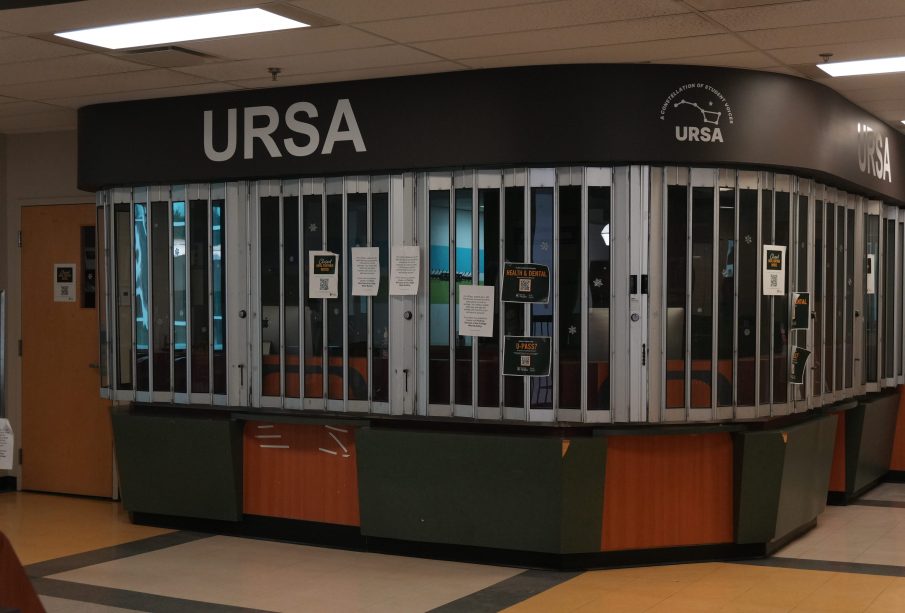
That question becomes more prominent with the response from University of Regina Students’ Association (URSA). While URSA declined a formal interview, they provided a written statement saying they are “always opposed to seeing further financial burdens placed on students” and emphasized the role of federal policy in limiting international student numbers.
That may be true. But it also sidesteps the deeper issue.
If universities have long relied on charging international students to absorb the impact of the funding gaps, was that model ever sustainable or fair?
URSA states they are advocating with both the provincial government and the university, aiming to build “collective pressure through a Canada-wide student network.” They also point out that the province has in the past capped tuition increases while committing to increased funding.
Even if advocacy is happening behind the scenes, for students on campus, that advocacy feels distant.
Statements are not the same as visibility. And right now, what seems to be missing is not acknowledgment of the problem, but an active presence pushing back against it.
It will be interesting to see the commitment and advocacy from URSA as they continue to build the association. Because historically, student associations, students, and campus groups played a huge role in challenging decisions that affected students. Even in 2022, many students advocated for the increase by having a “freeze the fees” for international students.
However, the streets of U of R have been eerily quiet for the last few months.
Where’s the beefs? Prof laments vanishing advocacy
To delve more into student advocacy on campus and the pressures of the increase, The Carillon, reached out to a longtime commenter on social justice and activism issues, Dr. Marc Spooner,
He’s a professor in the faculty of education who has often spoken out about the corporatization of higher education.
When asked about the role student advocacy can play during budget discussions, Dr. Spooner commented it is “crucial to both students’ interests but also the interest of the campus in general that a fully functional student union be present.”
Without this advocacy becomes harder to organize or hear.
But this isn’t just a campus issue. It reflects a broader shift in how education is funded.
Spooner notes that government support has declined, leaving universities “caught” and increasingly reliant on international students to make up the difference. Now as that model falters, the consequences of funding deficiency “gets pushed on to the students.”
Ultimately, this becomes an “intergenerational theft of opportunity” where students are left with “mortgage on their house of knowledge.”
At the same time, Spooner believes advocacy is important to campus life. Student organizations, centres and Independent media allow opportunities and critique.
“We need an active URSA,” Spooner said. “We need them to be as engaged and welcoming to student participation.”
When talking about hesitancy and student advocacy, Spooner does reflect that the campus community has been quieter. “I think that there definitely has been more advocacy in the past,” he says.
And he reinforces the idea that this is “something that has to be renewed with each generation.”
Spooner reflects that criticism is a necessary part of improving institutions.
“One of the most beautiful things about participation is the ability to critique and to allow improvement” he said.
Spooner reinforces the idea that nobody wins from not fully funding education, and hopes to see a united front on advocacy, reinforcing the equal importance of student organizations such as URSA, UR Pride, The Carillon, and RPIRG.
The university’s financial challenges are real. So are students’. The difference is that students have far fewer options for balancing their budgets than the institution does.
In times of huge storms, the smallest flocks of birds are often affected the most.