No food pantry? No student advocate?
The University of Regina Students’ Association (URSA) says a new agreement with the university has formally established URSA as the institution’s official and only recognized student government, giving it a role in allocating student fees to clubs and initiatives.
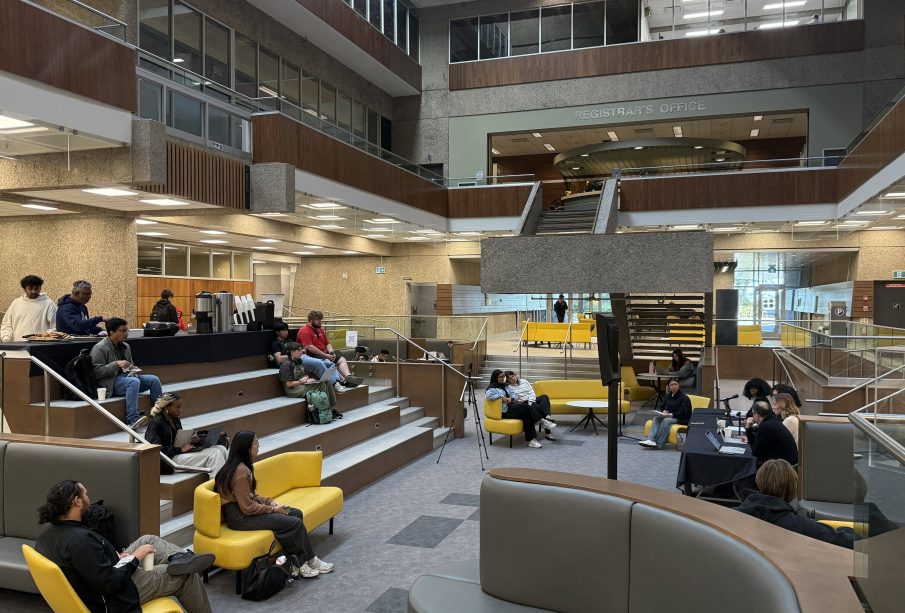
About eight students attended an Oct.7 town hall in the Ad Hum pit, where URSA discussed the agreement, club funding, a proposed food assistance program, and gaps in student advocacy.
The turnout was small compared with the U of R’s total student population for the fall term, this being 16,646. Those that attended were approximately 0.05 per cent of the total population.
Clubs can apply up to $7,500 in grants
One of the most immediate announcements concerned funding for student organizations.
URSA representatives said ratified student groups can apply for up to $7,500 in special grant funding, which is $2,500 more than what was available through the former student union.
Clubs requesting more than $1,000 must apply 20 days before their event, and an application requesting less than $1,000 requires 12 days notice.
URSA also said multiple student groups can collaborate on grant applications, allowing organizations to combine portions of their allocations to fund joint events.
Retroactive funding is possible, although groups can receive a maximum of 50 per cent of an event’s total cost retroactively.
Student groups’ ratification deadline was midnight Oct. 16 and new applications will not be accepted after the deadline.
I have always seen so many students rely on the pantry. It’s awful that we don’t have it right now. Honestly, how hard is it to put a couple of cans of beans out on a table? -Anonymous student
Food assistance program remains in development
Food insecurity was another issue raised during the town hall. When asked whether the university’s former food pantry would return, URSA said they are researching a new food assistance program.
Representatives said they want to address food insecurity while ensuring the initiative remains financially stable. The program’s structure has not been finalized.
The lack of a confirmed date or structure has left students feeling confused.
“Food insecurity isn’t something students can put on hold while they plan their structure. It would be good if URSA representatives explained what their plans or next steps are for the pantry or what support is available in the meantime,” said a student who wished to stay anonymous.
“I have always seen so many students rely on the pantry. It’s awful that we don’t have it right now. Honestly, how hard is it to put a couple of cans of beans out on a table?” they said.
Students still lack a general advocacy worker
The absence of a student advocate was another concern raised at the meeting. URSA said it doesn’t currently have a general advocacy worker dedicated to helping students with university related disputes.
The association does have an academic misconduct appeals support worker who can help students understand the process, prepare for meetings, and navigate appeals.
However, academic misconduct support does not cover every situation in which a student might need assistance navigating university procedures or challenging an administrative decision.
URSA also announced Academic Integrity Week, scheduled for Oct.19 to Oct.23 in collaboration with the Faculty of Arts. The week will include workshops and events focused on academic integrity, misconduct, and student support.
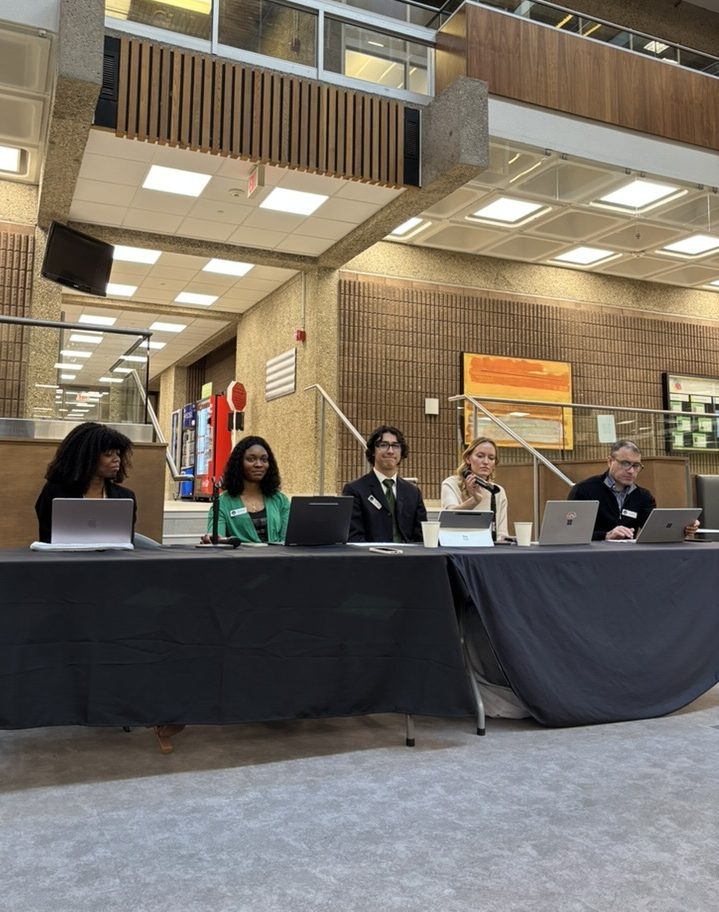
Image: Arufha Malek
AI policy remains informal
The use of artificial intelligence was also featured in the discussion, although URSA’s broader services and funding plans took centre stage.
URSA said it currently does not have a formal anti-AI policy, but its internal position is that creative work, including writing, marketing, as well as design and photography, should not simply be handed to generative AI.
Representatives said they have rejected posters submitted by student groups when generative AI was used to make them.
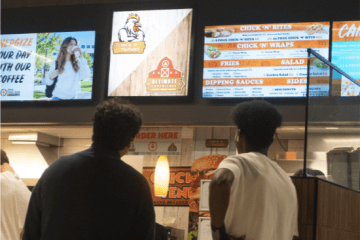
The discussion expanded to food vendors using AI on their menus on campus. URSA said they have been speaking with university food services and are currently engaging with one campus vendor about the issue.
When a student asked whether URSA would support a petition concerning businesses use of AI, the URSA president Ethan Wiechert suggested a petition could be an appropriate first step. URSA did not launch or announce a petition.
Is there anything they are doing for students at the town hall? Is there any free food? Tell me why it ain’t nothing but a heartache and I’ll be there next time. -Manahil Asad, a third-year kinesiology student
Questions remain about student engagement with URSA
Despite the range of issues discussed, approximately eight students attended the town hall.
The URSA representatives also do not have media relations contact, which makes it harder for students to know if there is a town hall happening on campus.
The town hall announcement was made on Instagram and was on some screens on campus.
“I didn’t know they were having one, and I feel like posting a meeting agenda would help students go, so they know what we are discussing there,” said Manahil Asad, a third-year kinesiology student.
“Is there anything they are doing for students at the town hall? Is there any free food? Tell me why it ain’t nothing but a heartache and I’ll be there next time,”she said.
URSA’s plans
The URSA representatives said they are also working to improve student communications, including replacing broken televisions around campus, improving bulletin board management, and streamlining student emails. Representatives estimated around half of the televisions on campus were working.
As URSA established itself as the university’s recognized student government, its progress will not only depend on the funding services but also whether students are receiving the support they need.