
U of R students weigh the economic and political implications of separation
Alberta has voted to remain a part of Canada with 75.5 per cent of voters rejecting the province’s separation in the Oct. 19 referendum, while roughly 24.5 per cent supported moving toward a second, binding vote on independence.
“It’s a great result for Canada. I’m thrilled that Albertans have chosen unity,” Prime Minister Mark Carney told reporters on his way to a cabinet meeting in Ottawa.
The Alberta referendum listed 10 questions on separate ballots. The first five questions inquired Albertans for direction on policy options surrounding the question of immigration, Canadian citizens and permanent residents eligibility to qualify for provincially funded services and voting requirements.
The second set of questions contested changes to the constitution. The tenth question asked if Alberta should remain or initiate the legal process to hold a future referendum for separation.
Fern Dignean, a third-year human justice student, opposed the idea of Alberta separating from Canada. She said that the likelihood of Alberta surviving on its own is unlikely.
“They don’t want to spend money on helping the rest of the nation now. How would they spend the money to create a new nation state?”said Dignean.
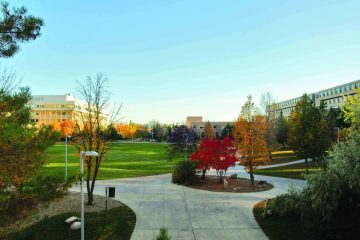
The University of Regina (U of R) held a panel on Oct. 15 with panelists retired journalist Murray Mandryk, Jim Farney from Queen’s University, Brian McQuinn from the U of R, and Tom McIntosh from the U of R as the moderator.
This panel discussed the topic of Alberta’s possible separation referendum: “Alberta Decides: Will they stay or will they go?”
The discussion examined the run-up to the referendum, evaluated the performance of the for and against separation campaigns over the recent weeks, and the potential possibility and impact of foreign interference. Finally, they evaluated the broader implications for the remaining nine ballot questions.
Niamh Hickey, a first-year education student, was not overly surprised at the results of the referendum, but commends Alberta Premier Danielle Smith on moving forward to holding the referendum.
“I think that shows her commitment to allowing people to vote and express their opinions,” Hickey said.
She noted that both sides presented a compelling case regarding separation and holding a referendum but believes that provinces would not do well if they ever separated, noting that Alberta is landlocked.
They don’t want to spend money on helping the rest of the nation now. How would they spend the money to create a new nation state? -Fern Dignean, third-year human justice student
Quebec’s provincial election
Prior to the referendum voting on Monday in Alberta, Quebec held their provincial elections on Oct. 5. Voters there have elected the sovereigntist Parti Québécois (PQ).
The PQ is a nationalist political party which was founded in 1968 by René Lévesque. This party was formed to promote the idea and to achieve political independence and national sovereignty for Quebec from Canada. The PQ went on to hold two referendums on Quebec sovereignty, one in 1980 and another in 1995.
Dignean said that the difference between Quebec and Alberta having the notion to separate is that Quebec is more culturally based and rooted in historical grievances, while Alberta is based primarily on the lack of understanding of equalization and individualistic selfishness.
“[I think] Quebec would also fail if it did separate, given the amount of money it receives in equalization payment,” said Hickey.
Quebec receives a large amount of federal equalization payments, as it is the largest population among the provinces of the program. Hickey notes that without that revenue Quebec is receiving, it would either fail on its own, be absorbed into the United States, or asked to rejoin Canada.
She understands that there is a difference in culture and language that sets people apart, but also that Canada prides itself on being multicultural.
“If we can have different types of people here, I think Quebec needs to start recognizing how much it relies on Canada,” she said.
While Ottawa faces the uncertainty of Quebec’s sovereignty once again, the PQ has promised on their platform that they would consult with the population of Quebec Independence after the United States President Donald Trump leaves office. They have plans for allocating five per cent of Quebec’s GDP to defense, for joining NATO and NORAD, and are soon to have their own Quebec currency.
It’s a great result for Canada. I’m thrilled that Albertans have chosen unity. -Prime Minister Mark Carney
Saskatchewan Prosperity Project
Brad Williams, a retired correctional officer, formed the Saskatchewan Prosperity Project (SKPP), a non-profit educational project that supports and promotes the benefits of Saskatchewan Independence.
According to the SKPP website, they are committed to helping the people of Saskatchewan “shape their own destiny” by securing a brighter, self-determined future through economic growth, liberty, and equal opportunities for everyone in the province.
Under their mission and vision, it states, “We believe sound policy is the bedrock of prosperity, and we advocate for the need to explore avenues for greater sovereignty within or outside the Canadian federation.”
They hold volunteer positions to help campaign and engage people with information about a free Saskatchewan and hold town halls.
“It’s basically people who label themselves as fiscally conservative, but mostly it’s just about economic selfishness,” said Dignean.
Despite Saskatchewan having its own separatist movement, it had not garnered enough attention like Alberta has. Dignean points out that Alberta has had better individual economic success than Saskatchewan has over the past 50 years.
She noted that there is more money there than compared to here, as Alberta holds the fourth-largest oil reserves in the world.
“There might be grievances here and some hard feelings, but I also don’t think that the government likes to rile it up as much, because there also wouldn’t be as much benefit for a separatist government here,” said Dignean.
“If they [Saskatchewanians] voted for it, go hard, but I can’t see it sustaining anything,” she said.
Hickey echoes the same opinion, that Alberta has oil and it’s a lucrative resource, but Saskatchewan doesn’t have that same value of a resource to export and trade with other countries. Indigenous perspective is important when it comes to the topic of land.
“You’ve got a whole group of people, who have called this place home longer than many of us have. And that needs to be really respected,” said Hickey.
Hickey disagrees that calling people names and belittling the ideas and conversation of separation is a productive conversation. She believes it would cause more tension and that “we as a people need to say, I respect your view, but I disagree…”
“I don’t think people should get overly upset when the idea is brought forward. I think we need to remain peaceful and remain open to conversations,” she said.