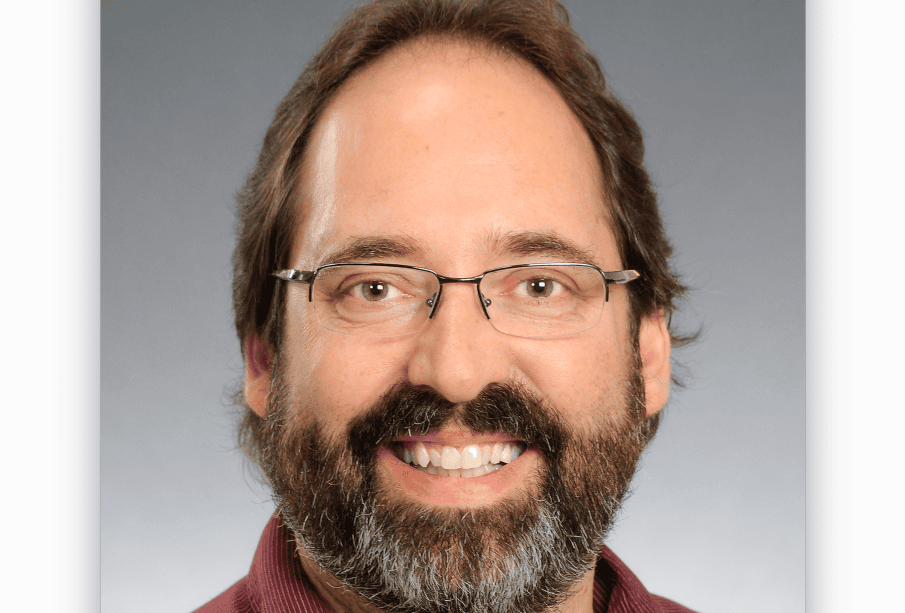
Dr Petry says U of R is a “Goldilocks University”
Students and scholars pursue a Philosophy, Politics, and Economics (PPE) degree to be equipped with the tools to expertly analyze how power, resources, and moral frameworks intersect and how we can use knowledge of each to better understand the other.
In his conversation with The Carillon, Professor Dr. Roger Petry, a Philosophy professor at Luther College, gives us insight into how these interdisciplinary fields are integrated to better understand our world and the direction we are headed in.
Classes
“This semester, I’m teaching philosophy of religion and critical thinking […] Especially if you’re dealing with a pluralistic society with very different religions, if you don’t understand what people are saying and how to even communicate across that, and then to say something reasonable, or philosophy does, you’re at a disadvantage.”
As Professor, Dr. Petry stated, to be ignorant of the beliefs of others puts those in a pluralistic society at a disadvantage. As Canadian society is pluralistic, we must strive towards communicating, cooperating, and understanding the real differences of thought and culture belonging to such a diverse country to peacefully coexist.
Education
Professor Petry’s extensive education first began at the U of R, where he worked from 1986 to 1990 to get his Bachelor of Arts in Mathematics and an honours degree in Philosophy through Luther College. After going to Oxford, in University College, he got a Rhodes Scholarship from 1990 to 1993, doing an undergraduation in PPE and a graduate degree.
He also pursued a masters in philosophical theology relating more to the philosophy religion, as well as a course on the early church councils in the Roman empire.
“I did a thesis called Intellectual Vision of God. So he was looking in mystical experience where different religious mystics claim to have direct cognition about various things. And then, for my PhD, I did that back at the University of Regina, through the Canadian Plains Research Centre. I started in 2001 and finished it in 2008. And that was an interdisciplinary PhD that involved sociopolitical philosophy. “
Dr. Petry also talked about his early research works.
“[…] I had done quantitative research when I was a researcher with Sask Housing Corporation, which was in the early 2000s. I was able to have direct experience with the government at that point.”
You can’t really think about sustainable development without economics, because it uses the language of development, and then innovates in terms of the terminology. -Dr. Roger Petry
What students should recognize
Dr. Petry elaborates that the most important concept a philosophy student should know is to identify what the significant concepts are in the first place.
“And that’s kind of what we try to do in philosophy, but also figuring out the significant concepts and realizing people often think there’s a single concept when there’s actually multiple concepts being used. And understanding when is the concept appropriate to be used for what types of thinking problems that you’re dealing with.”
I think another benefit of the interdisciplinary approach of PPE is that it gives students the tools to understand these various concepts from different angles to understand the full picture.
Reading
Professor Petry emphasizes how essential it is in disciplines like philosophy, or any field, to develop focus, and careful analysis through detailed reading.
“Should students do more reading? Well, the humanist in me says, yeah, because it’s in reading that you also develop your vocabulary, and a lot of your hardware, which is really quite essential.”
YouTube videos cannot substitute for the skills gained from really reading, he advises.
I agree that many people in general could do better to build the necessary literacy skills, and in this new era of short form and/or AI generated content, it’s become even more important to maintain these skills, and even more worrying when they’re neglected.
Career
Professor Petry applied his background in Economics in his lifelong career in sustainable development, first at the Sherwood Cooperative Association and then in his career in sustainable development. His PPE degree equipped him with the background knowledge needed in his work in research and development.
“I’ve devoted my life to sustainable development […] You can’t really think about sustainable development without economics, because it uses the language of development, and then innovates in terms of the terminology,” said Dr Petry.
He started working on sustainable development in 1994. In 2007, along with his colleagues, he created a regional centre of expertise on education for sustainable development, under the United Nations University, in Tokyo.
I think one of the things students don’t realize is how lucky they are to be at the University of Regina. We’re at a university here in Saskatchewan, […] what that means is that we’re not beholden to the old system in the way that other places on the planet are. If we want to move into a sustainable future, we’ve got all the opportunities in the world. -Dr. Roger Petry
Some hopeful estimates of the future in Saskatchewan
Professor Petry explained that U of R students are fortunate enough to be in a province and university with unique advantages. Given Saskatchewan’s lack of industrialization, expansive land, small cities, and nonprofit sectors, even vulnerable factors like water management provide an opportunity to test sustainable practices, and provide this province with an environment that can create sustainable ecosystems.
There is a promising future for sustainable development initiatives in our province, which I think should be a reassuring and attractive reason for Saskatchewan youth to stay and invest in its development.
“I think one of the things students don’t realize is how lucky they are to be at the University of Regina. We’re at a university here in Saskatchewan, […] what that means is that we’re not beholden to the old system in the way that other places on the planet are. If we want to move into a sustainable future, we’ve got all the opportunities in the world,” said Dr Petry.
Additionally, Professor Petry describes the U of R as a “Goldilocks University,” as it isn’t too small to be missing key departments like the humanities, but it’s not too big to never encounter other disciplines in your own discipline like the University of Toronto.
Dr Petry said, “You’re in the right university, in the exact right place in history.”