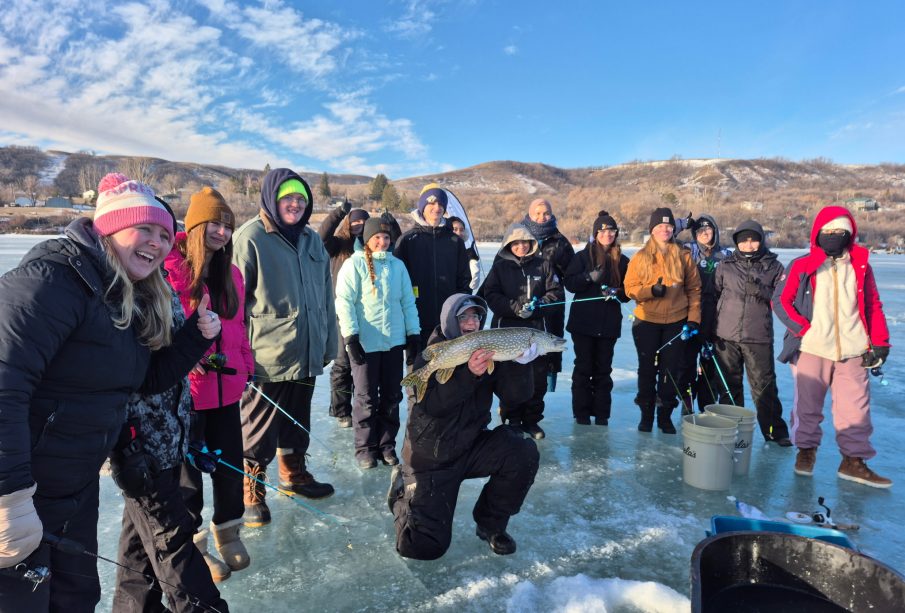
Some in the team led by PhD student Zachary Eltom were first time anglers
University of Regina’s (U of R) team performed notably well in the first Hardwater Havoc – North Central Division ice-fishing competition.
U of R’s team led by PhD student Zachary Eltom had 17 other members and secured the second spot with 882 points behind Lethbridge Polytechnique as the winning team with 1,022 points and ahead of University of Nebraska at the third position with 668 points.
The competition
The North Central Division of the tournament lasted over six weeks starting at 6 a.m. on Jan. 9 and concluding at 6 p.m. on Feb. 20.
The inaugural competition which was open to students and supporting university and college staff was organised by the American Fisheries Society (AFS) in collaboration with Angler’s Atlas.
AFS is the world’s oldest and largest organisation that works toward conservation of fisheries and aquatic resources, advancing fisheries-based science, and strengthening of the fisheries profession.
Angler’s Atlas is a free digital platform with an app and website offering anglers detailed bathymetric maps, fishing hotspots, and information on more than 330,000 water bodies across Canada and the United States.
The AFS’s website states that the tournament, which is expected to be held annually going forward, was organised to promote student angling and citizen science.
Seven other universities in addition to the U of R from Canada and the United States participated including Bell State University with 13 members, Carleton University with five members, Lethbridge Polytechnique with 24 members, Trent University with 20 members, University of Nebraska with 11 members, University of Saskatchewan with 3, and University of Winnipeg with 5 members.
All freshwater species except small-bodied minnows were eligible targets and participants could catch and report their catches anywhere within the boundaries of AFS’s North Central Division over the course of the competition via the MyCatch app.
The scores were evaluated based on the length of the fish caught and added up for all the days of the competition. The winning team won a $1000 award. An award ceremony was also held for the winners on Friday, February 27. The competition is expected to return next year around the same time.
Easily learned and enjoyable
The Carillon spoke with Dr. Chris Somers, professor, department of biology, who is the PhD supervisor of Eltom and did the recruiting for the team.
Dr. Somers shared that two of the undergraduate students who volunteered as team members were first time anglers. Despite having no prior experience with fishing, they were able to learn quickly and contribute to the team’s score.
“I think what it goes to show is that ice fishing is something that’s successful to everybody,” he said.
He believes that with a little bit of guidance about the technique, even first-time anglers can excel at it making it an enjoyable outdoor activity during winters.
“It’s a really super enjoyable activity, and people can catch fish who have never even angled before.”
He also shared that by participating in tournaments like these allows students to contribute to the school spirit. This is something he thinks every student should experience once. He plans to send a team to the competition next year as well.
Having a chance to get outdoors and to experience something different, I think it’s something that many students should try.” – Dr. Chris Somers
First time angling experience
The Carillon had the opportunity to speak with Venuz Manzon, a second-year student in the department of biology, who participated in the competition. Manzon was one of the two undergraduate students who had never fished before.
She learnt about the tournament when it was announced in her Introduction to Genetics lecture by Dr. Somers.
“We were told about [the competition] in the class but it was very last minute that I was included in it.”
Manzon elaborated that she was originally supposed to be a part of an angling field trip later in the season but not in the Hardwater Havoc tournament. She, however, received an email which was sent out to a list of interested volunteers regarding a last-minute spot that had opened up after one of the original team members had to unexpectedly drop out.
“[Somers] mailed at 8:30 in the morning if anyone would like to come [at the] last minute and I managed to grab that opportunity,” she said.
For Manzon, the fact that she had never fished before made the opportunity and the experience all the more thrilling. She explained that she grew up in Dubai and had no experience fishing.
“It was my first time fishing and first time holding a fishing rod and working with baits and stuff. I never really thought that fishing would be that fun, especially something that you have never done before.”
Manzon shared that while others on the team were experienced anglers, as a first-time angler herself, she had to learn how to fish while competing. “It was a learning curve,” she said.
Holding a fish for the first time and one that she caught herself made her especially excited, shared Manzon. She caught seven fish in the tournament.
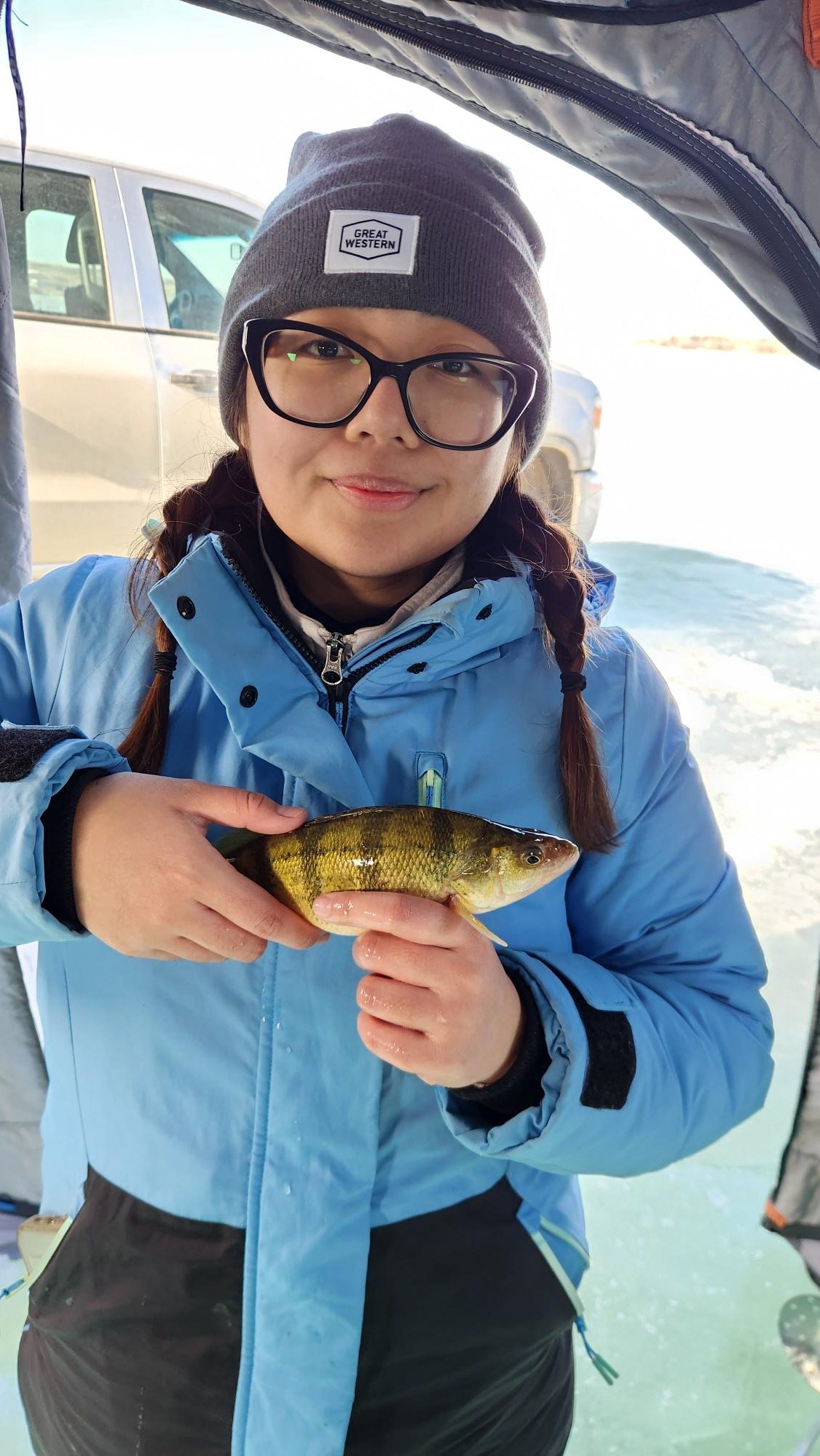
“I remember I screamed so loud [when I caught the first fish] that the entire lake heard me.”
Manzon also shared that Dr. Somers, who was present at the tournament as the university support staff, was very helpful in teaching the first-time anglers the tips and tricks of fishing.
“Somers was a great teacher, and he really taught us the tips and tricks for how to get the fish that we want and it was really helpful,” she said.
Having enjoyed fishing a lot, Manzon shared that she is planning on continuing to do more field work and concluded with the message that newcomers should be open to opportunities.
“Just put yourself out there. Being able to see nature, plants, and animals which is also considered field work is enjoyable.”
Embrace the winter
As a concluding message for the readers, Dr. Somers urged them to embrace the winters.
“Get out and try something new like ice fishing. And it can be something that you do for food. You can catch fish and eat them. You can catch and release; admire the fish and put them back. But having a chance to get outdoors and to experience something different, I think it’s something that many students should try,” he said.