Elias Burns-McKay told he must have misheard what was said
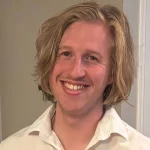
In a conversation with the Carillon, a fourth year Bachelor of Fine Arts student at the University of Regina (U of R), Elias Burns-McKay, recounted a classroom incident that occurred last fall and left him feeling unsettled and uncomfortable.
Burns-McKay further mentioned feeling dissatisfied with the faculty of Media, Arts and Performance’s (MAP) response to his concerns when he brought them up.
Burns-McKay was enrolled in the ART 400: Professional Issue I course in the fall 2025 semester when his professor allegedly used the word “Indians” when referring to the Indigenous peoples. He said that he felt uncomfortable with the use of the word especially in a classroom setting.
While mentioning it to the Carillon, he requested for the professor’s name to not be mentioned in the article. He said that he does not want any punitive measure but to have an opportunity to sit and talk with the professor about the incident.
The Carillon contacted the professor via email requesting for a comment on the incident but received no response.
According to Burns-McKay, he spoke to the professor privately after the incident but felt unsatisfied with their conversation. It was then that he decided to bring it up to the Associate Dean of MAP, Susan Johnston, after discussing the situation with the then department head, Sean Whalley and First Nations University (FNUniv) professor, Audrey Dreavor and being suggested to raise his concerns.
The incident
ART 400’s syllabus in the fall 2025 semester included mandatory weekly luncheons with a guest speaker.
“It’s like a weekly event put on by the visual arts department during the semester, where they have like either, uh, a professional artist or a, like a master student, or somebody working in the arts to give a presentation on what their work is […] you have to go to every art for lunch on Fridays,” said Jesse Stueck who was also a part of the class and a witness to the incident.
Burns-McKay disagreed with some of the points mentioned by settler descendent artist, Zachary Logan, during one of the luncheons held on Sept. 19, 2025. After the luncheon, Burns-McKay took to Instagram to share his thoughts. Burns-McKay mentioned that the thoughts that he shared on the social media platform were viewed by the professor. His professor has then asked him if he would want to discuss his thoughts in class which Burns-McKay was not conformable with.
In the lecture that followed, the professor brought up what was said by the artist at the luncheon for discussion, as per the statements given by Burns-McKay and Steuck. As the discussion moved forward, the professor used the term “Indians” to refer to the Indigenous people which caught Burns-McKay off guard, he told the Carillon.
“[They] ended up calling us Indigenous people, Indians, which is outdated language,” said Burns-McKay.
He said that he didn’t like what the professor had said, and that he ended up speaking with them privately after class so he could address how he was feeling.
“I told [them that they had] used the word Indians when describing Indigenous people, and they said, ‘no I didn’t say that,’” he said.
Burns-McKay mentioned feeling that the professor gave him an unmeaningful apology during the conversation after which they proceeded to say that they were referring to the seven Indian tribes and that he must have misheard them.
Student witness shares her account
The Carillon tried to seek out and speak to other students who were present in the lecture during the incident. A fourth year Bachelor of Arts student, Jessie Stueck, shared her account.
“I don’t remember specifically when [they] used the word Indians, but I do remember having a discussion with another classmate right after being like, ‘whoa, like, I can’t believe [they] said that,’” said Steuck.
“It just came out so casually that I didn’t have an initial response in time in the class, but I do remember discussing it with a classmate after [that] I was really surprised. To hear it in the context which we did.”
Steuck said that she felt that the professor was “a little too comfortable” in using the word.
I want to sit down and have a conversation with the professor and to understand what they had told me when we spoke privately […] It’s about having a conversation and restoring whatever was hurt or harmed from the situation.” – Elias Burns-McKay
Department’s response to Burns-Mckay
Burns-McKay expressed “still feeling off” about the whole situation after his conversation with the professor. He decided to discuss the incident with a FNUniv professor, Audrey Dreavor. Dreavor informed Burns-McKay that he should bring this further to his department head.
“I had only one short conversation where I recommended he meet with the MAP department head. But, yes, I did speak to Eli and recommended he go to the department head with his concerns. It is the right of students to have their concerns respectfully addressed,” said Dreavor in response to the Carillon’s request for a comment on the situation over an email.
Burns-McKay then brought it up to the then department head Sean Whalley who, according to Burns-McKay, suggested that he should speak to the associated dean of the department.
In response to the Carillon’s request for a comment, Whalley said over an email that, “Conversations with students, under any circumstance, are confidential and conducted in confidence. The period time you have referenced is also when I was acting department head for visual arts, a role I am not currently in […] I recommend directing any questions you may have to [the associate dean’s] office.”
The issue was eventually brought to the associate dean of MAP, Susan Johnston. Burns-McKay told the Carillon that he was informed by Johnston that “the professor hadn’t actually said the word Indians, and that they were talking about pretendians” and that he had misheard them.
He also said that Johnston additionally informed him on the professor’s behalf that they felt that the class discussion was becoming heated and that they were cut off midsentence. Burns-McKay, however, claims that the professor was leading the conversation and was the only one speaking.
He further shared that Johnston had informed him of the option to go to Respectful University, the U of R department that deals with cases of discrimination and harassment. He was also told that if upon taking the matter to Respectful University an investigation was pursued, he would not be allowed to speak about the situation to anyone else at all. Burns-McKay said that he opted against that because he felt that he was being encouraged to drop the case.
Burns-McKay additionally shared an email with the Carillon from Johnston which according to him implied that the situation was becoming too much.
“It was implied that the professor was getting uncomfortable with my persistence on having a conversation, and that I needed to let it go. So [in the end] I did,” he said.
The Carillon’s conversation with Johnston
The Carillon spoke to Johnston to understand the department’s side of the story. She told us that while she cannot comment on “specific cases or hypotheticals” due to confidentiality clauses, she can walk us through the process of dealing with students’ concerns with professors.
“Unfortunately, I can’t address specific cases or even hypotheticals with you […] I can talk about policy,” said Johnston.
She elaborated that for any incident like this the policy outlines a step-by-step process where the associate dean begins by meeting with any student who has a concern, whether that be with a class or with a professor.
“The second thing is that any concern, because there is a wide variety, will be explored […] and obviously I would do so in the context of our teaching regulations, our syllabus regulations, University of Regina policy, the collective agreement, if it involves staff or faculty [since] this is a unionized environment,” she added.
She also mentioned that she makes it a point to inform the students what the recourse beyond her will be.
“They might, it might be a matter that they could or should take to respectful university services […] If a student is dissatisfied with my resolution of the matter, they can always go to the dean of Media, Art and Performance as well. Sometimes if a student doesn’t want to take those formal pathways what I can do is limited […] that’s your decision as a student.”
As for Burns-McKay’s case, she maintained that she would be unable to discuss any conversations with him since they were confidential.
Burns-McKay’s request for resolution
“I want to sit down and have a conversation with the professor and to understand what they had told me when we spoke privately,” he said. Burns-McKay added that he wants clarity on the whole situation and that he didn’t want any punitive measures given that isn’t what he believes is justice.
“It’s about having a conversation and restoring whatever was hurt or harmed from the situation.”
Why inappropriate and offensive?
In the 1970s and 1980s, the term “Indian” began to be considered outdated or offensive by many Indigenous peoples and organisations in North America.
The shift came as a part of political movements that pushed for a terminology which was self-determined, respectful, and accurate to refer to the Indigenous peoples. The term was largely replaced by “First Nations” in Canada.
Today, in Canada, while still used in certain contexts like the Indian Act, the term is considered largely inappropriate and offensive in general and everyday conversations.
Burns-McKay agrees that while there are contexts in which the use of the word is innocuous, it was not used in such a context in this incident.
“There are definitely contexts in which it is not offensive […] But it was not used in an acceptable context.”