Students talk about how Saskatchewan winter adds the stress of the semester
Deep freeze disrupts schedules
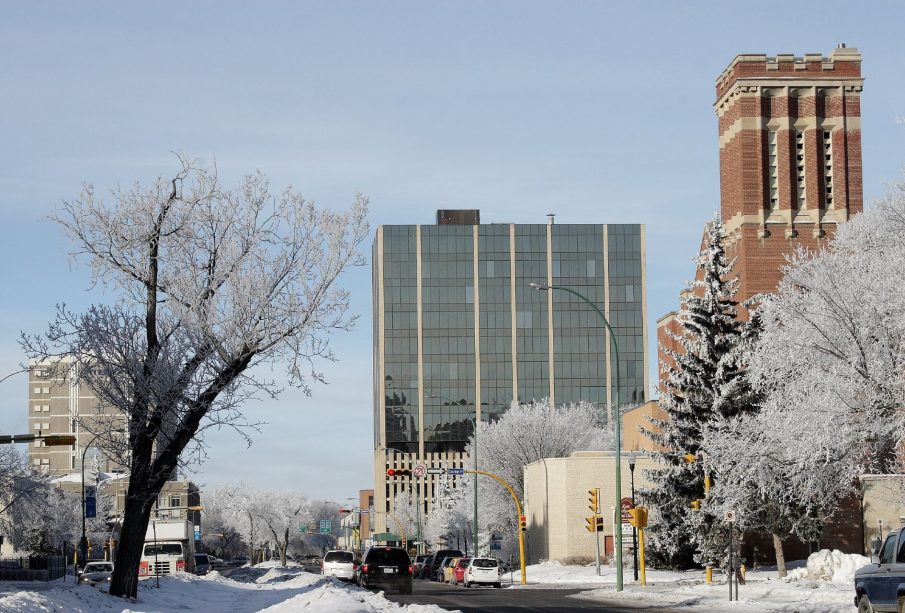
A late January deep freeze with wind chills nearing -40 C has forced winter semester students to deal with bus delays and icy roads.
After the “orange weather alert” regarding the freezing rain and strong winds that Regina faced in December 2025, the city yet faced another bone-chilling deep freeze in the last week of January 2026.
In response to the bad weather conditions, the City of Regina made an overnight warming bus available from Jan 22 to 26 to those seeking refuge from cold for the night, especially those without shelter.
The brutal weather patterns have also affected U of R students who continue to survive the winter and get through another semester.
“It is not just the winter season or the cold, but it is the fact that one day, you can be walking to class in a light jacket, and the next, you need a blowtorch to get your car door to open,” said Brad Vlokin, a First Nations University (FNUniv) student.
“Most of my classes are in the evening from 7 p.m. to 10 p.m., and I can say that sometimes it feels like wrestling the very air itself.”
Part of growing up Regina
For those who are fortunate to live on campus, the 8:30 a.m. classes are less of an adventure and more of a light walk from the dorms to classrooms and labs. Those who live off campus cannot hit that snooze button, and instead, be up early, layer up, and get to classes on time.
It is common to see students sprinting to the bus stops as they navigate the transit schedules every day to make it to campus. Others with cars are usually out early to shovel snow from the driveways and power up frozen batteries, which can be particularly painful on days that feel like -40°C with wind chills.
For Michelle Wilkinson, a U of R graduate student in the faculty of science, navigating the biting winds and delayed buses to get to class is just part of the student experience.
“I was born and raised in a small town outside of Regina, and I have been living in Rochdale, in the north end of the city, since I came here for university. I think I’m just used to it by now,” says Wilkinson.
“At a point, you definitely become used to the routine, and to me, all these winter struggles are just part and parcel of life, especially here in Saskatchewan.”
Jack Milton, a third-year computer science student, says people growing up in Regina develop a “sixth sense for this stuff.” He explains that what feels extreme cold for newcomers is normal for those who have lived in Regina for their entire lives.
“Most of my classes are online this semester. I am usually on campus when I’ve got to lock in and study for my midterms and finals. There is not much else to do when it’s this cold except that I went to the Frost festival this week […] So, I would say that you don’t fight the winter, but you simply adapt.”
For Julia Smith, a fourth-year business student, getting to class on time has always been her top priority, even if that means leaving home an hour earlier.
“I can always pride myself on having always shown up to my classes and labs on time. During winter, I usually start my car 20 minutes before I have to leave.”
Smith looks forward to graduating soon and being done with coming to school on cold winter mornings.
“I think I’ve done four years of these winters, and I am excited to be graduating in April and walking the stage this June.”
For Tricia Pandey, a first-year nursing student, this is her first experience of a Canadian winter.
“Back home, I have only seen snow in movies. It felt surreal, actually, to be able to feel the snow firsthand,” says Pandey. “I do not leave without my gloves, jacket and beanie […] I realized the winter can also be quite depressing, especially with the gloomy weather, but I definitely look forward to what the rest of the season holds.”
At least it makes a good story
Those who have graduated and moved on from the university also have interesting memories of their time to share. Seba AbdulKareem, a U of R alumnus and former employee of the Centre of Continuing Education, reminisced about her transit experience in a conversation with the Carillon.
“During my first three years, I relied on the bus to [come to] campus, all of which was pre-COVID. But schedules were generally accurate, even in winter, but getting to the bus was often stressful,” says AbdulKareem.
“In extremely cold weather, walks to the bus stop take longer, increasing the likelihood of missing the bus. I often wished classes were cancelled during severe weather, as the commute adds significant stress […] on one occasion, I was denied entry to a class because I arrived five minutes late due to stormy conditions.”
AbdulKareem spoke about her time as an employee at the Centre for Continuing Education being different from her time as a student.
“My experience as a U of R employee was quite different. I worked at the college campus, had moved to the east end of the city, and had obtained my driver’s licence by then.”
She explained that driving herself to work made the experience much easier and less stressful, as the bus schedules were difficult to navigate in the winter.
Keep pushing, we’re almost through
This week, the city expects the weather to be better with warm conditions and partly sunny skies. However, Saskatchewan winter is not over just yet. For U of R students while the cold is predictable, getting through it never gets easier. With a few more weeks of winter to go, spring is just at the horizon. The Carillon urges the readers to layer up, put on shoes with cleats, and keep pushing as we are close to the end of another Saskatchewan winter.