Wearing a hijab is not a hurdle between me and my freedom
What comes to your mind when you look at a woman who is wearing a hijab? If “poor little oppressed girl” is your first thought, then this article might be for you.
Misrepresentation and solutions
A little storytime. As journalism students we are often asked to interview each other as a part of in-class activities. The classmate I was partnered with for one such activity asked me faith-based questions, which I was happy to answer. During our conversation, I mentioned the fact that I haven’t been wearing a hijab all my life and had put it on a couple years ago. Hearing that, he seemed a little surprised.
This incident made me realise that when someone encounters a hijabi, they unconsciously attach a number of misconceptions to her. And honestly, it’s not their fault. The narrative that we have been fed for years through movies and media has been misleading.
I have never come across a hijabi character in a movie or a show who didn’t feel caged due to her hijab. The pivotal moment when taking off the hijab finally makes her feel “free” has been the storyline of many, if not all shows casting a hijabi character.
Associating freedom with the way a woman dresses feels ridiculous to me. Misrepresentation of muslim women in western media has led to the belief that a practicing muslim woman lacks agency, which again, is untrue.
However, I recently realized that just complaining about misrepresentation is not enough. Looking for a solution is a must. So, my fellow hijabis, if you are tired of being misrepresented, take an initiative, make a career in mass media, represent yourself, and break these stereotypes. Don’t just look at the screen and cry. Work behind the screen to make sure you are correctly represented.
Collaborating with other communities is also necessary to get rid of this “muslim women are oppressed” mindset. Being able to tell your own stories is vital for these misconceptions to change.
I say this because being a part of the solution is what I strive to be. Hijab isn’t a hurdle in my life. It doesn’t stop me from educating myself. It doesn’t prohibit me from achieving my goals, whether they be academic or lifestyle.
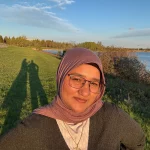
The household I grew up in never forced me to wear a hijab so, when I put on the hijab it was my choice. I will repeat, wearing the hijab at the age of 18, was my own choice!“ – Arufha Malek
Let go off the pity
Growing up in a country where muslims are a minority, all my childhood friends were non-muslims. For me, their way of dressing felt normal, and I feared that wearing a hijab would make me look orthodox and backward. However, I soon realised that the way I dress should please me and my beliefs and no one else.
The household I grew up in never forced me to wear a hijab so, when I put on the hijab it was my choice. I will repeat, wearing the hijab at the age of 18, was my own choice!
Since I put on a hijab in my late teens, I could clearly see the difference in the way I was treated after.
I remember one incident vividly. I went to this optical shop which I had been going to for years and had encountered the sales people many times. While I was selecting my frames, one of them kept looking at me as if I had horns on my head.
It made me extremely uncomfortable. Mind you, this was an individual who had seen me a number of times before. The look on their face and the pity in their eyes made me want to run away.
This was the result of ethnocentricism which is judging someone else’s way of life by the preset standards of one’s own way of living.
Hijab isn’t a hurdle in my life. It doesn’t stop me from educating myself. It doesn’t prohibit me from achieving my goals, whether they be academic or lifestyle.“ – Arufha Malek
Faith or career: an unfair choice
Currently, 24 countries globally have banned burqa (outer garment which covers the whole body) and niqab (a garment that covers the face and leaves the eyes uncovered), of which seven countries are in Africa, seven in Asia, and 10 in Europe.
In Quebec Bill 21 which bans wearing any religious symbol in public spaces for state employees like teachers and police officers has led many muslim women to choose between their careers and faith.
According to the National Council of Canadian Muslims (NCCM) 73 per cent of muslim women in Quebec have considered leaving the province due to Bill 21, 54 per cent have heard racist remarks at work, and 45 per cent of Quebec’s population either do not support and oppose Bill 21.
Adopted in 2025, Bill 94 in Quebec which is an extension of Bill 21, bans any religious symbol for school staff including janitors and volunteers. According to NCCM, 12 muslim women lost their teaching jobs due to Bill 94 and according to CBC, dozens of Montreal school staff have either been fired, suspended, or decided to resign following the new law.
Trying to fit everyone in a single mold is simply unfair. Furthermore, I believe it’s vital for many to educate themselves about Islam properly before forming opinions about muslim women.
I believe it’s crucial for hijabis to achieve everything they dream of whether it’s getting that degree or playing that sport or seeing the world. Bans on hijabs ironically hinder their freedom more than the hijab ever could.