
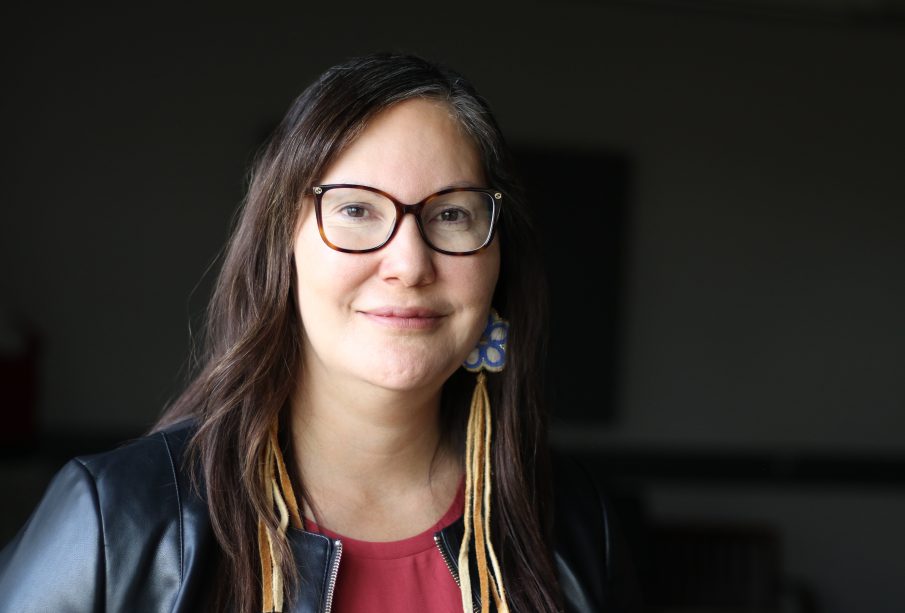
Kathy Walker discusses the importance of the decolonization of education
In many ceremonies across the nation, “we live on Treaty…” is heard during land acknowledgements, but as a university, what does it mean to live on treaty land?
Sept. 30 is National Day for Truth and Reconciliation, a day on which extra time is taken to understand and reflect on treaty agreements.
The Carillon spoke with Kathy Walker, The Treaty Commissioner of Saskatchewan, to understand the ongoing importance of treaties as well as treaty education for post-secondary students.
Let’s define what constitutes a treaty: according to the Government of Canada, treaty agreements are made between the federal government, Indigenous groups, and provincial/territorial governments highlighting the rights and responsibilities for each group.
Regina, Saskatchewan is under Treaty 4 territory, where the agreement stated Indigenous groups in the Qu’Appelle area share the land, while the government provided the group with reserves, tools, money, and education.
What is the office of Treaty Commissioner?
In discussing the mandate of the treaty office, Walker says it is “to create common understanding on treaties and to strengthen the treaty relationship amongst partners and citizens.”
Treaties not only constitute land agreements, but are the foundation of governance. It is a way to bring people together in harmony.
Walker comments, treaty parties “were supposed to value and respect one another’s ways of life.”
Walker also talks about the history of education, which included assimilation and residential schools. This caused what is most commonly known as cultural genocide. The genocide is the legacy that we are faced with.
How we teach education and what we teach to make it more reflective of all the people that live here and understanding what was agreed to under the treaty. –Kathy Walker
Colonization of education
How do we deconstruct such a dark legacy? Walker says it is dependent on “how we teach education and what we teach to make it more reflective of all the people that live here and understanding what was agreed to under the treaty.”
An issue Walker mentions is the westernization of the curriculum, where Indigenous voices need to be more inclusive. She says there is still a lot of work needed to decolonize the institutions.
Decolonizing education
Walker says there needs to be inclusion of Indigenous perspectives, where “elders co-teach classes or courses with faculty” and are “adequately compensating them for their time and knowledge.”
This involves using more Indigenous pedagogies, which are more holistic. Decolonization also includes practicing miyo-wîcêhtowin. This means building good relationships not based on competition or power but on peace and balance focused on helping one another, and establishing pimatisiwin, translated as life or culture.
Intergenerational trauma for students
The treaty also encompasses the education of Indigenous people, however, there are also many barriers to accessing that education.
Walker says some of these barriers include “communities and families that are still dealing with a legacy of colonial policy that was very traumatizing.”
The ongoing existence of intergenerational trauma is one of the biggest factors that persist today.
No end to the racism
In general, Indigenous communities are considered to be “at the bottom of almost any socioeconomic indicator.”
There are biases where Indigenous people are profiled for crimes. The racism doesn’t end, and neither do the microagressions. Walker says, “it just really makes it difficult for you to just be yourself.”
Treaties are more than a signed paper; they are representative of the promises made and broken to the Indigenous people of Canada. Inclusion of Indigenous voices is needed to decolonize education and to erase the harms of colonial policies on Indigenous groups.