People volunteer to provide more aid in crisis than so called “people’s representatives”
A usually loud city gets even louder on a Friday night. Along with the regular party songs and beer cans, thousands of people came to help those affected by the recent earthquake in Colombia.
I was woken up by my grandmother screaming my name on Aug. 10 at 7:34 a.m. A strong earthquake was taking place in the capital city of Bogotá, Colombia. I tried to convince her that finding a strong column in the apartment and covering our heads should be our plan, but the fear made her take the more dangerous decision of going down seven flights of stairs. The earth did not stop moving until we reached the first floor, and even then, some of us kept shaking. For me, this was simply a scary wake-up alarm. For others, it was far worse.
Many said that material objects can be replaced, but life cannot. Try saying that to people who saved up their entire lives to build their own houses. To people who financially depended on their crumbled down business to feed their families. To people staying in shelters who do not know when they will return to the comfort of their own homes. Possessions, for people who fought so hard to get them, can be just as precious as life itself.
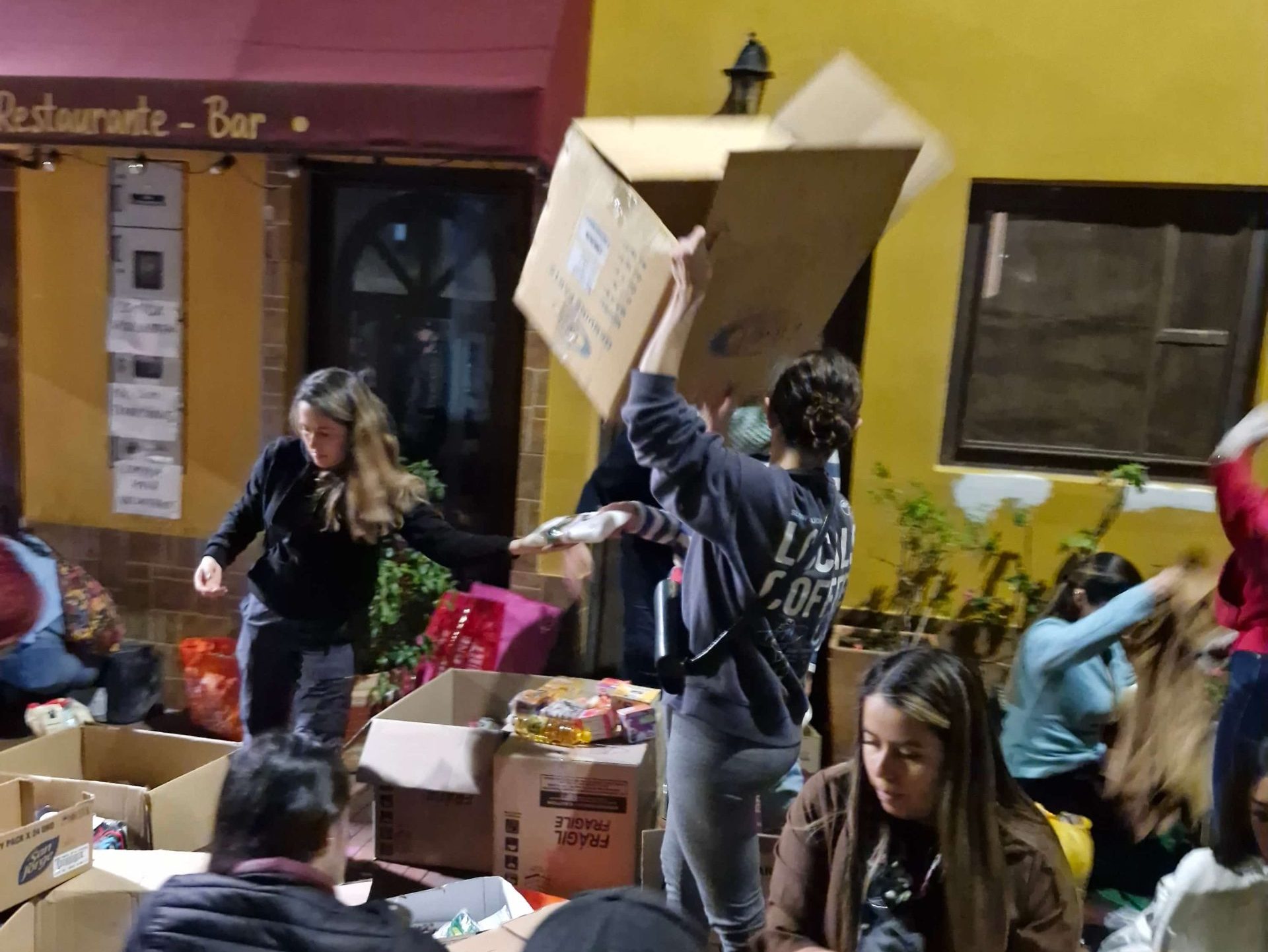
Image: Fernanda Rodriguez
Providing help
“What can I give?” is a question that went through the heads of millions of Colombians as they contemplated what they could donate, what the victims might need more than them. For some, it was clothing, mattresses, toys, canned foods, and for others who helped The Red Cross meet their daily goal, it was blood donations.
For my friends and I, it was whatever we could find at the supermarket. Rice and lentils, tampons and diapers, medicine for children, and whatever non-perishable cookies we could find.
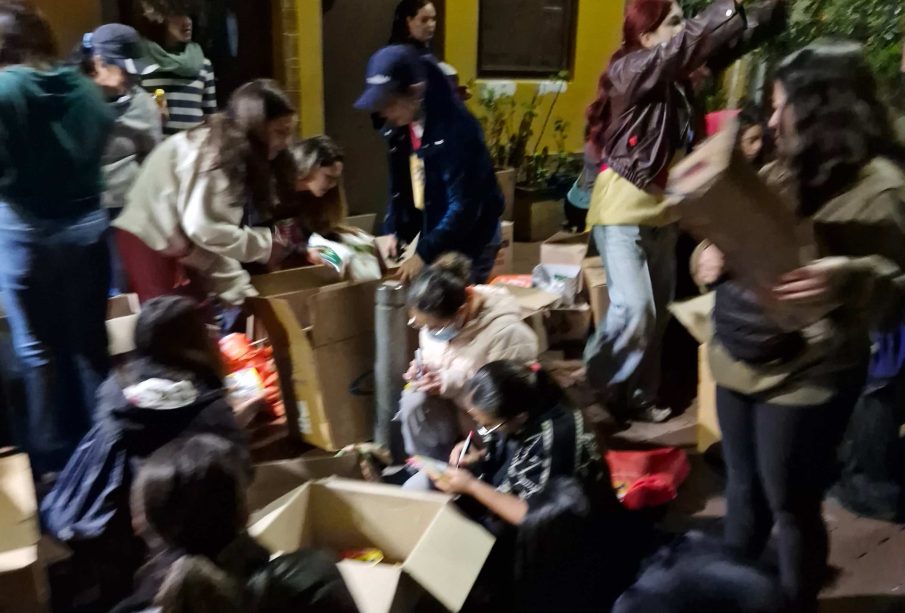
We drove through the chaotic traffic of a Bogotá evening, a city that never stopped no matter how much tragedy surrounded it. Then, we arrived at a donation centre. It was not even close to being the biggest in the city, yet, it was packed with people. It was difficult not to get goosebumps. The sound of tape and the smell of markers were overwhelming. Several people were sitting on the pavement in a narrow street.
“Do you have hygiene goods? Go over there. Food boxes go to your right,” said volunteers. It was an organized chaos, and in spite of the increasingly dark sky, people kept showing up.
Others, who maybe did not have cars, or maybe did not have goods to donate, decided to donate their time regardless and volunteer.
A homeless man had helped us, carrying our heaviest boxes on a hand truck. In spite of having several things he might have desperately needed from us, he asked only for a flashlight. The boxes we donated contained nine flashlights, as the tenth was given to the kind man helping.
The donation centre promised to take the contributions to the areas harder to reach. The earthquake severely affected many of the main cities of Colombia – Cali, Manizales, Pereira. However, it was difficult to get information about the smaller towns, because their telecommunication services were crumbling and the few places of access were blocked by gravel and mud. It was comforting to know that maybe, some of the flashlights we bought would make their way into the hands of volunteers looking under the rubble, as much of the aid took longer to arrive.
The earthquake left a death toll of over 300 people, amongst whom many were found under the rubble, and over 15 thousand families have been affected. The epicenter of the earthquake was in one of Colombia’s most vulnerable areas, the department of Chocó, more than 500 kilometers away from my city. The images shown on social media and the news were scary, but imagining those who had lost all communication with the world was even scarier.
Why was there a quicker response from the people than from those in power whose job is to take care of us? Why is the president donating soccer balls to impacted racialized communities instead of contributing with grief counseling and rebuilding? -Fernanda Rodriguez
Where were public servants in times of crisis?
There were mixed feelings about the situation. Though there was relief over the amount of help given by so many citizens, questions were still raised about larger systemic issues.
Why was it a privilege to live in a well-built home? Why was there a quicker response from the people than from those in power? Where were those whose job is to take care of us? Why is the president donating soccer balls to impacted racialized communities instead of contributing with grief counseling and rebuilding infrastructure?
This natural disaster, like the previous one in La Guaira, Venezuela, or several others that have happened in countries like Chile and Mexico, ended up reassuring me something about Latin America: for better or worse, we are far more than the people who claim to represent us.
In spite of our scarring political differences and how much we were taught to hate each other, we are still a community. Community is often the only thing we have. In spite of Colombia’s high-partisanship, no one stopped to think twice about the political preference of the recipient before donating what they could.